In this guide, we will walk you through creating an installment plan.
This is ideal for offering flexible payment options, allowing customers to split their purchase into multiple parts while still receiving the product upfront. Works great for both physical and virtual products.
We will also share how the Sublium Installments plan works on the storefront.
For instance, we will define multiple installment plans for an online course.
Here are the plans we will create:
| Plan Type | Billing Structure | Down Payment | Notes |
| One-Time Purchase | No renewal | Not Applicable | Customer pays the full amount upfront |
| Pay-in-2 Parts | 2 monthly payments | Required | Customer pays a down payment, then 1 additional payment |
| Pay-in-3 Parts | 3 monthly payments | Required | Customer pays a down payment, then 2 additional payments |
You can follow this process to create any type of installment plan.
How to Create Installment Plans

Once all the products are set for which you want to create the Installment plans, follow these steps:
Step 1: Create an installment plan
Go to your WordPress Dashboard and navigate to Sublium Subscriptions ⇒ Plans.
You’ll get an onboarding screen. Scroll down and click on the “Create Plan” button.
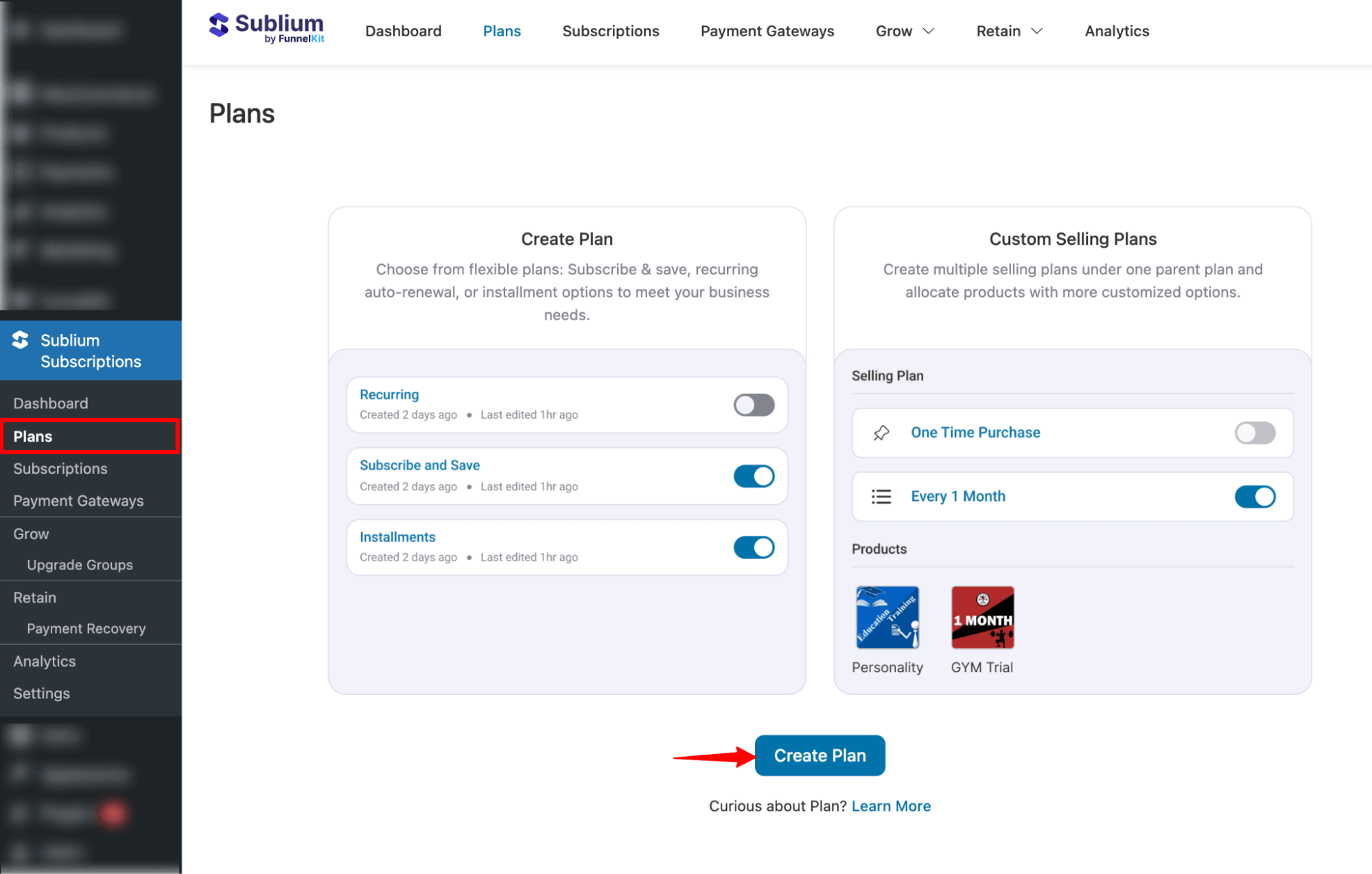
You will be presented with three plan types to choose from:
- Recurring
- Subscribe and Save
- Installments
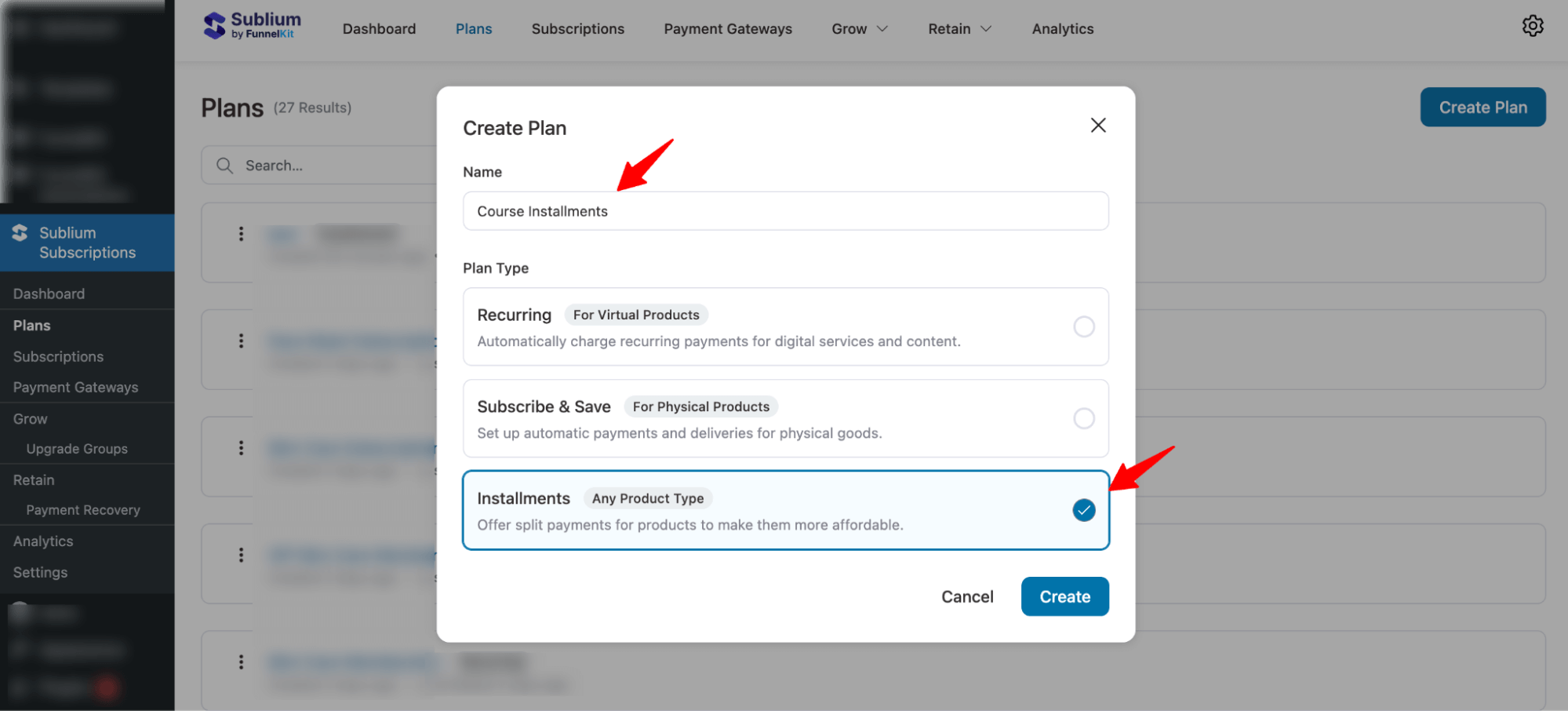
Since we’re creating an installment plan, select “Installments” and enter a descriptive name for your plan (e.g., “Course Installments”).
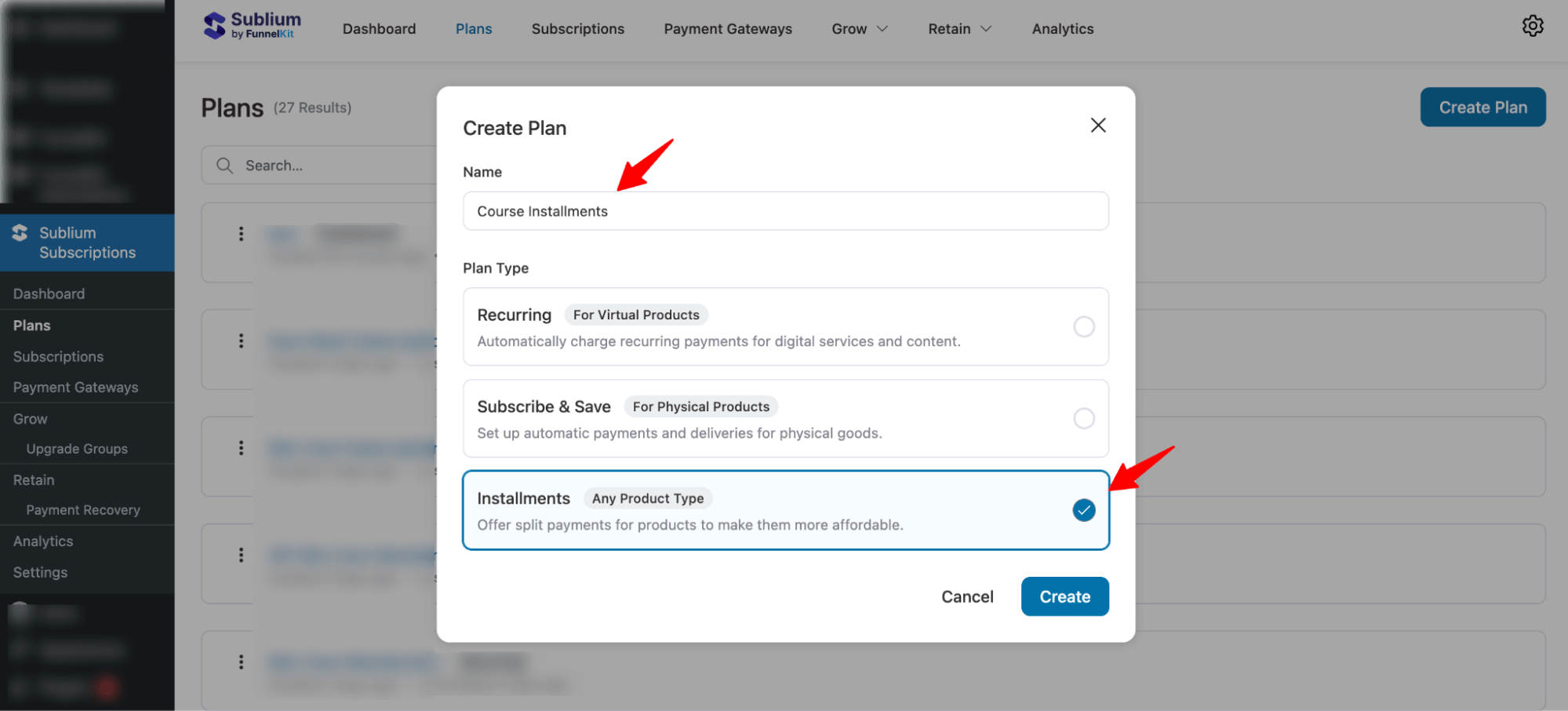
Once done, click on “Create” to create your subscription plan.
Step 2: Configure the Installments
You will land on the “Selling Plans” tab and find a default “Pay in 2 Parts” plan.
To start configuring the selling plan, click on the plan name.
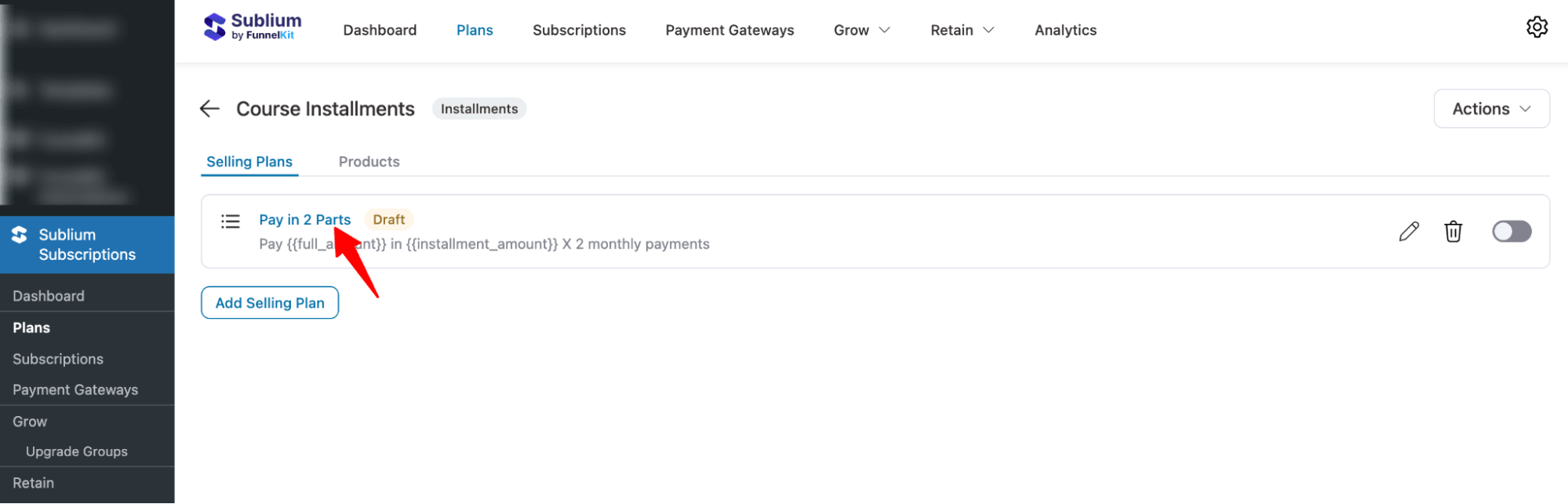
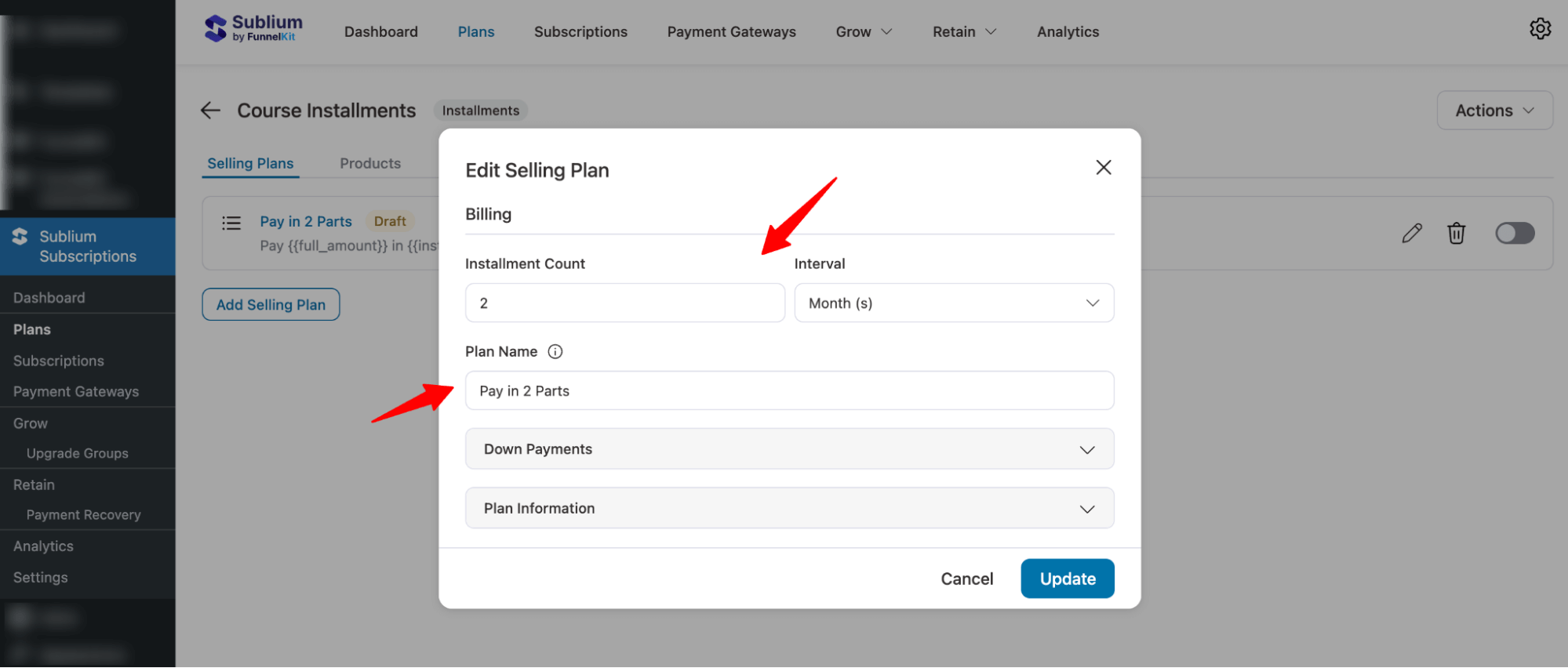
Now, configure the installment plan using the following options:
- Installment Count: Set the total number of installments the customer will pay, e.g., 2 installments to split the payment into two equal parts.
- Interval: Specify how frequently each installment will be charged, in days, weeks, or months, e.g., 1 month for monthly installments or 14 days for a bi-weekly cycle.
- Plan Name: Provide a clear and descriptive name for the installment plan so customers can easily identify it, e.g., Pay in 2 Parts.
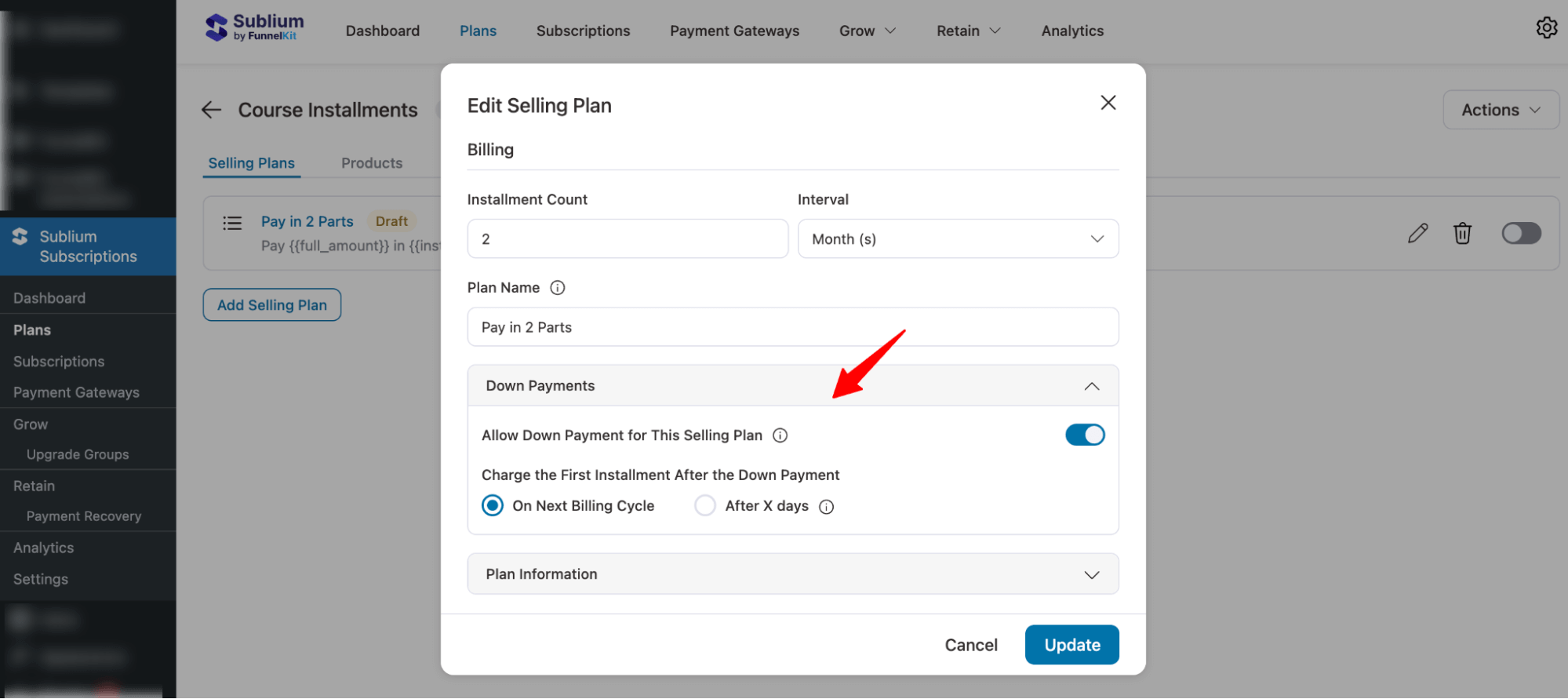
- Down Payment: Expand the Down Payment tab and enable “Allow Down Payment for This Selling Plan” to collect an upfront payment. Once enabled, configure “Charge the First Installment After the Down Payment” to determine when the first installment will be charged:
- On Next Billing Cycle: Choose this to have the first installment charged on the next scheduled interval
- After X Days – Choose this option to charge the first installment after a specified number of days. Then set the days.
- Plan Information: Add the details that will be displayed to the customer after they select the installment plans.
- Pricing Breakdown: Display installment count, pricing, and down payment on the product page after the selling plan is selected.
- Additional Description: Provide a brief summary of the plan that appears when customers hover over the pricing breakdown on the product page.
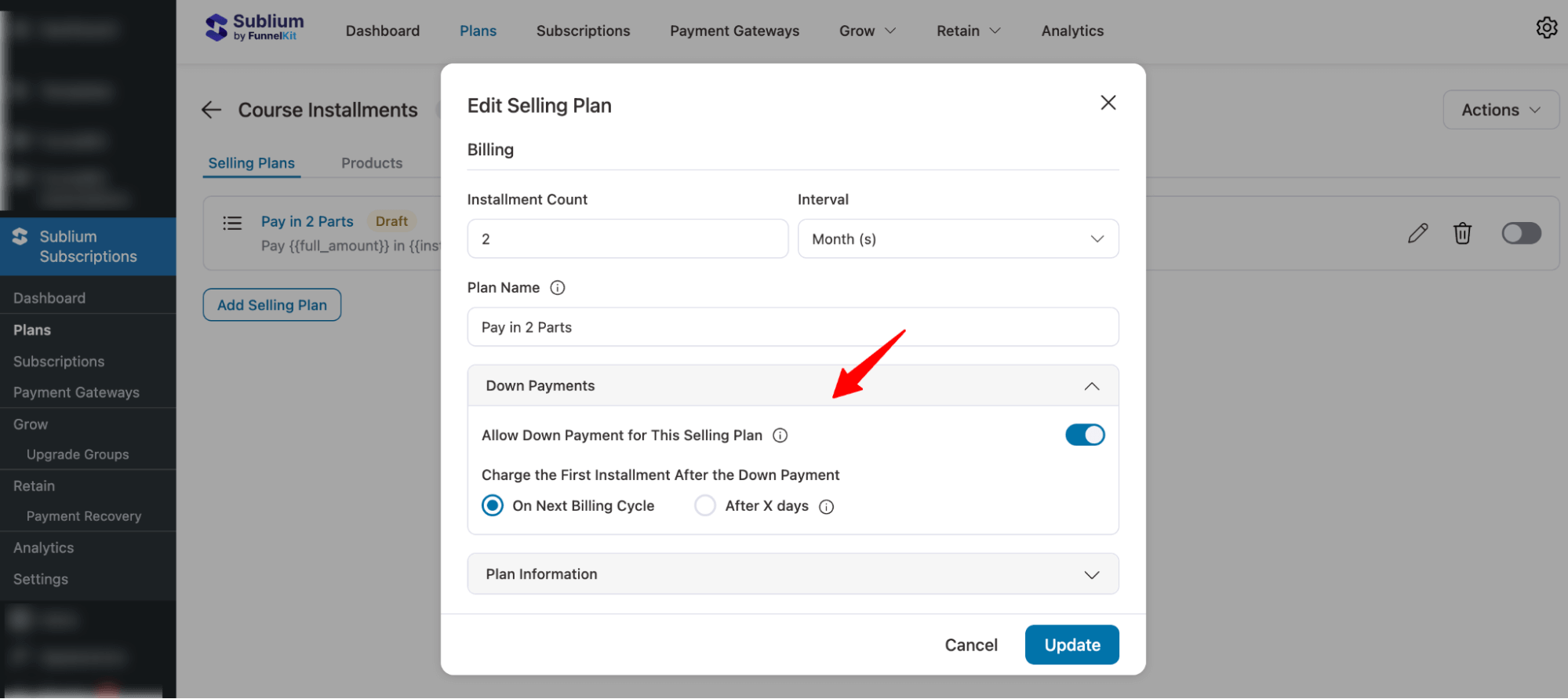
Once done, click on Update to save your configuration.
Then you must enable the installment plan by toggling the button and confirming it.
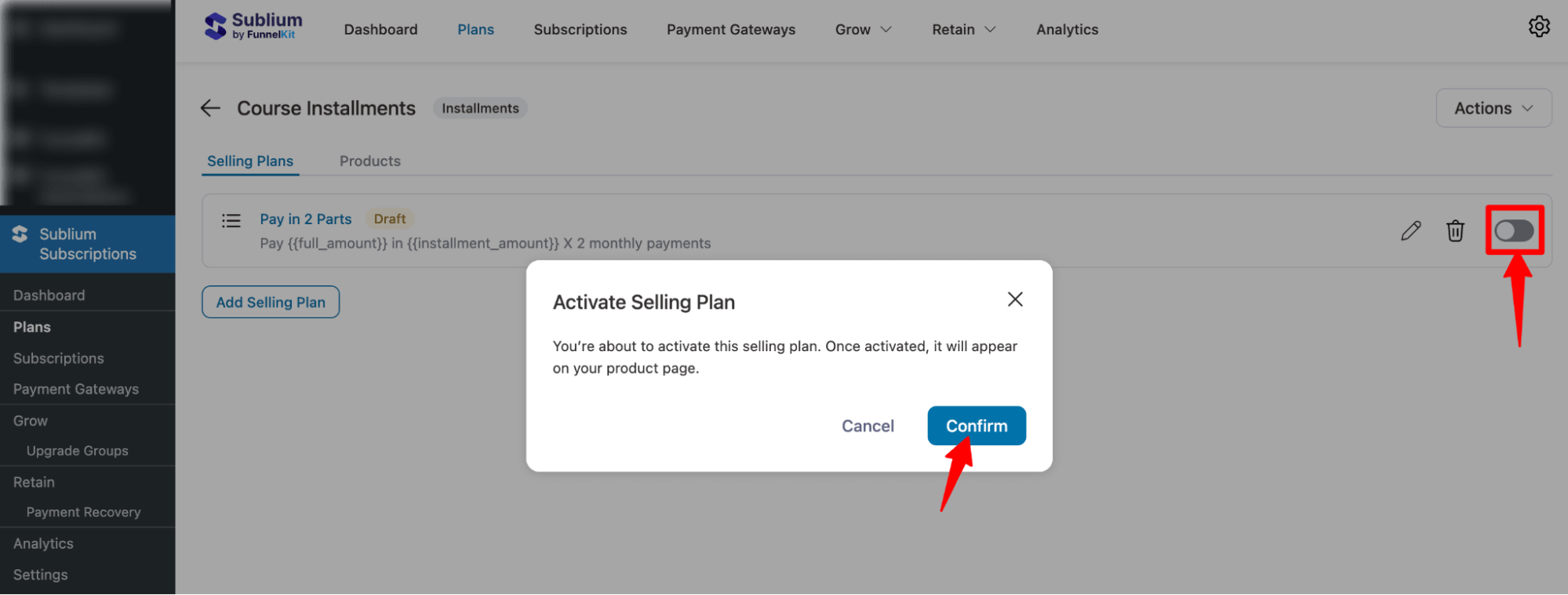
One of your installments is now ready.
Step 3: Create multiple Installments plan
To add more installment plans, hit the button “Add Selling Plan” and then configure it like you did in the previous text.
Here, we have a Pay-in-3 Parts installment plan.
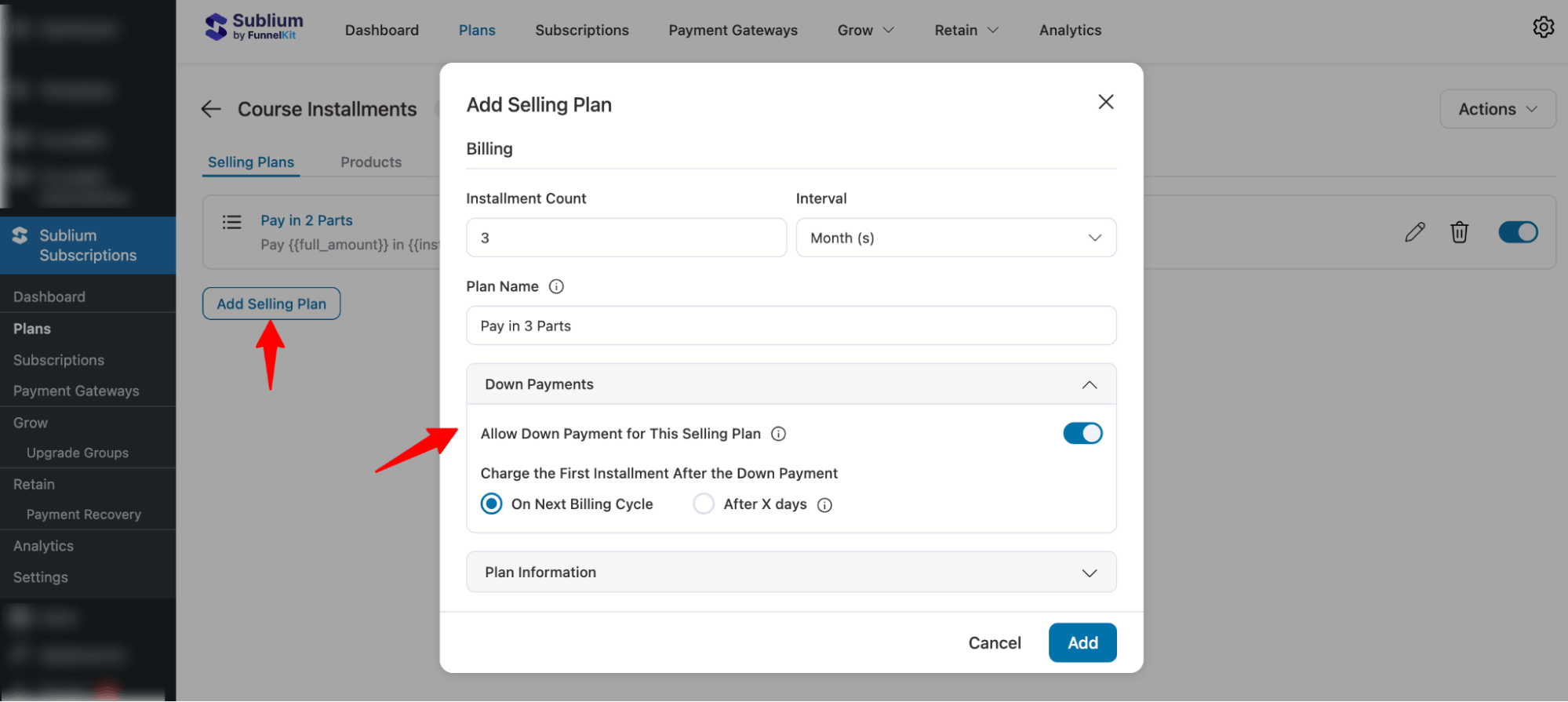
Make sure to enable the plan as well.
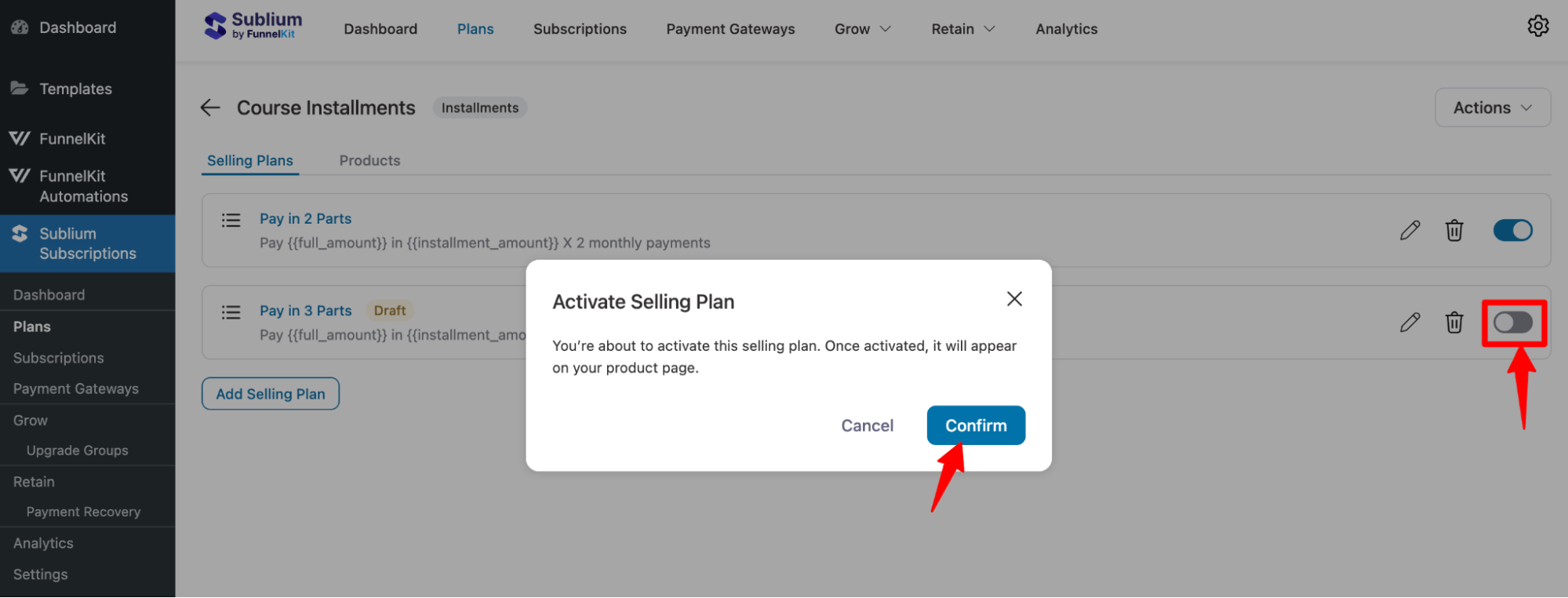
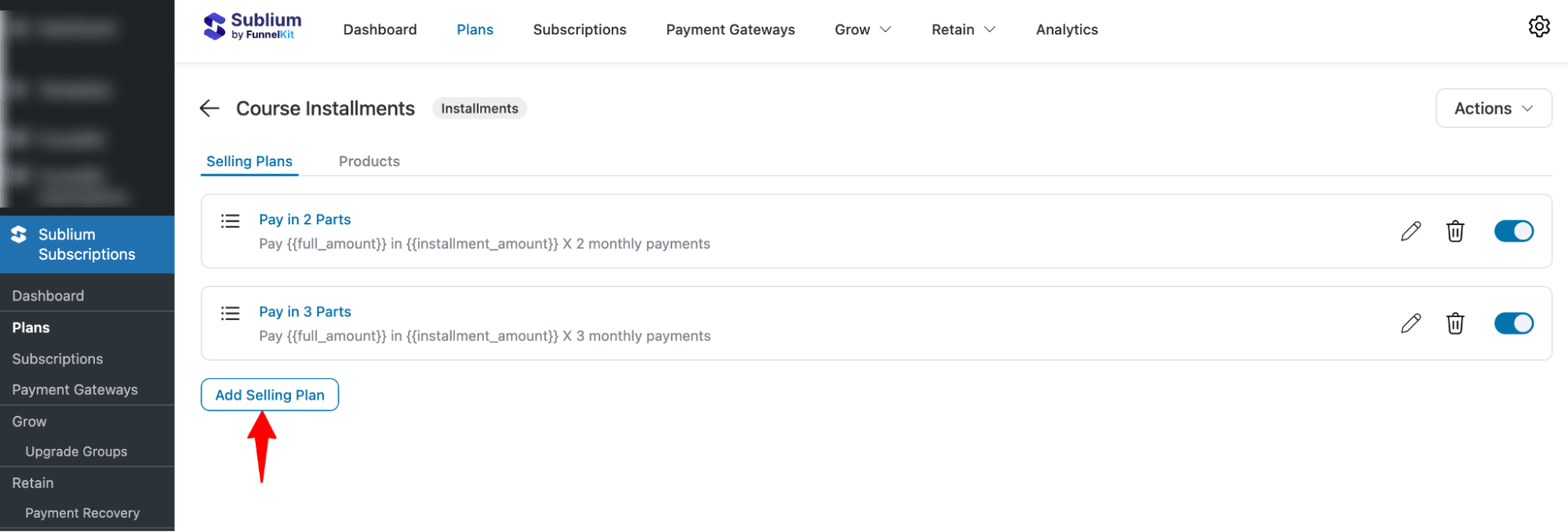
You can add as many installment plans as you want. To add a new one, again hit “Add Selling Plan” and configure the installment plan.
Step 4: Assign installment plans to products
To assign any specific product, switch to the “Products” tab and hit “Add Product”.
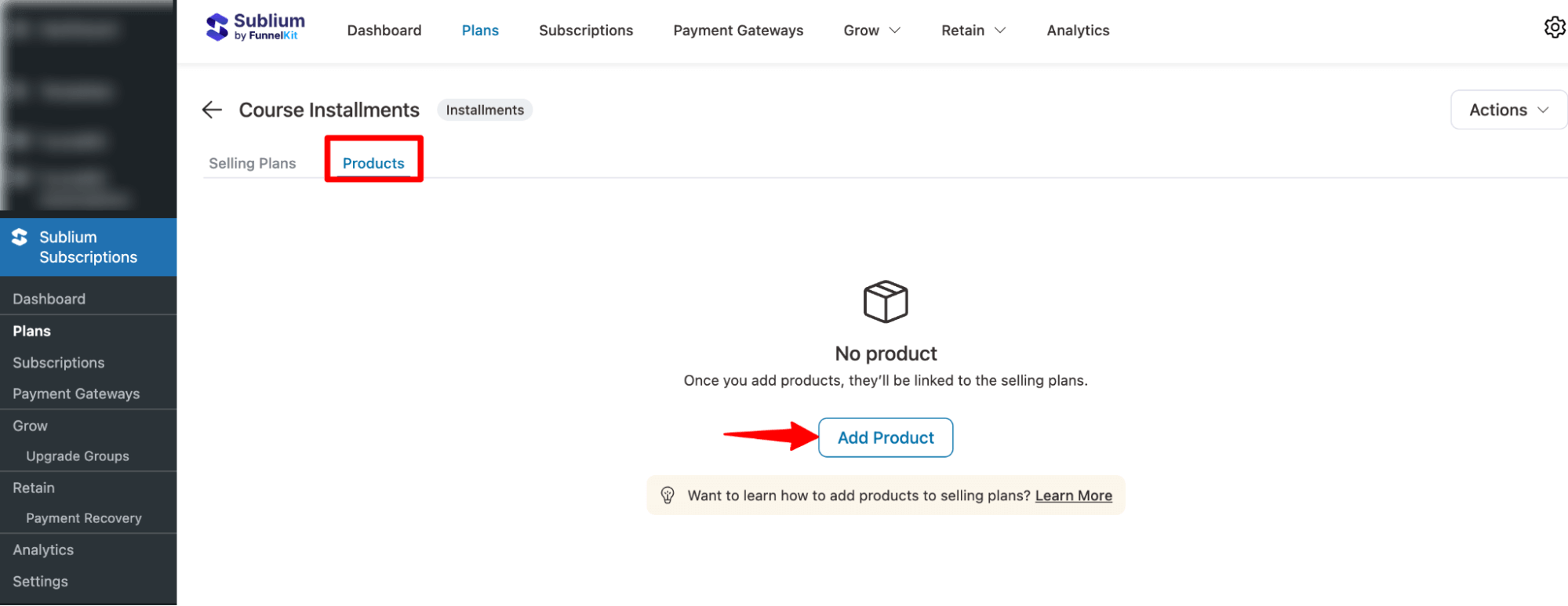
Next, search for and add the product.
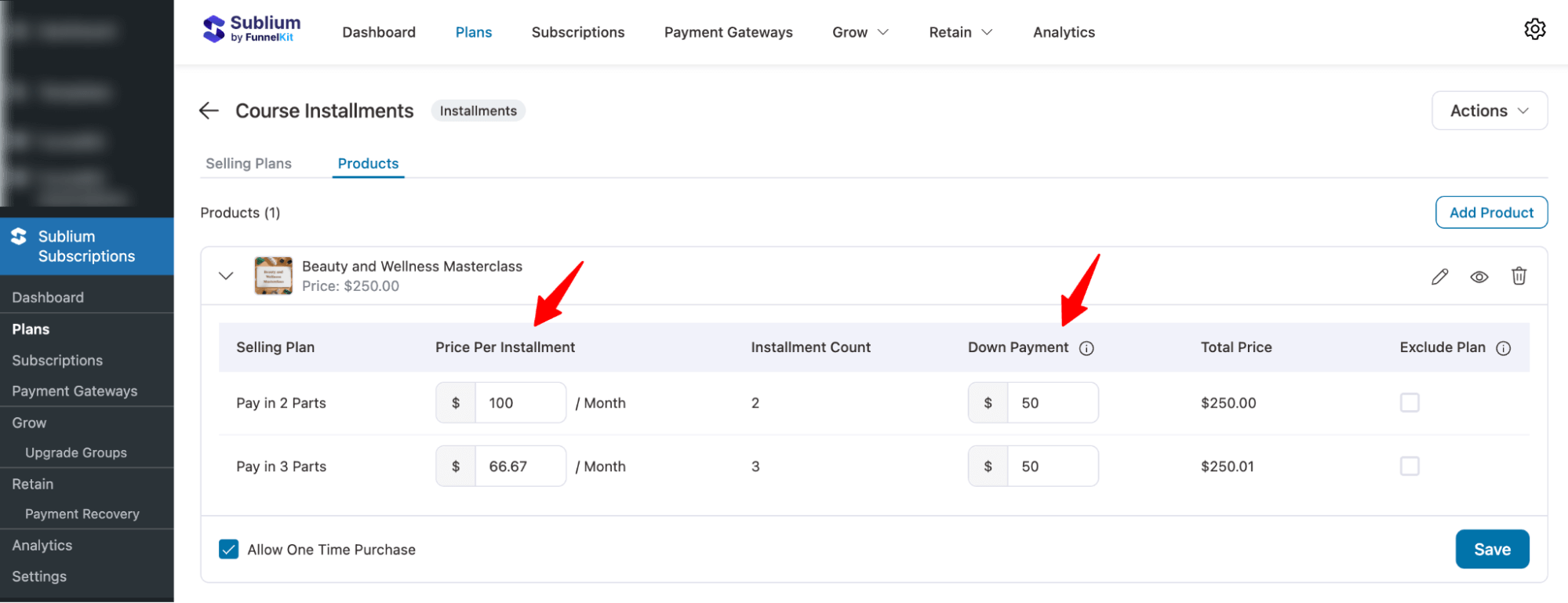
After adding the product, you will see all the installment plans along with the one-time purchase option.
Here, you can configure the installment plan details. The “Price Per Installment” is automatically calculated based on the product’s base price.
You can also set a “Down Payment” if required, and adjust the “Price Per Installment” to ensure the “total price” matches the intended product price.
Note: The down payment is an upfront initial payment charged at the start of your installment plan. This one-time fee is deducted from your subscription’s total cost, with the remaining balance divided into manageable installments over the payment period.
Additionally, you can exclude any installment plan from specific products or scenarios by selecting the “Exclude Plan” option.
Step 5: Disable one-time purchase (optional)
To disable the one-time purchase option, simply uncheck the box labeled ‘Allow One Time Purchase’ and confirm your changes.
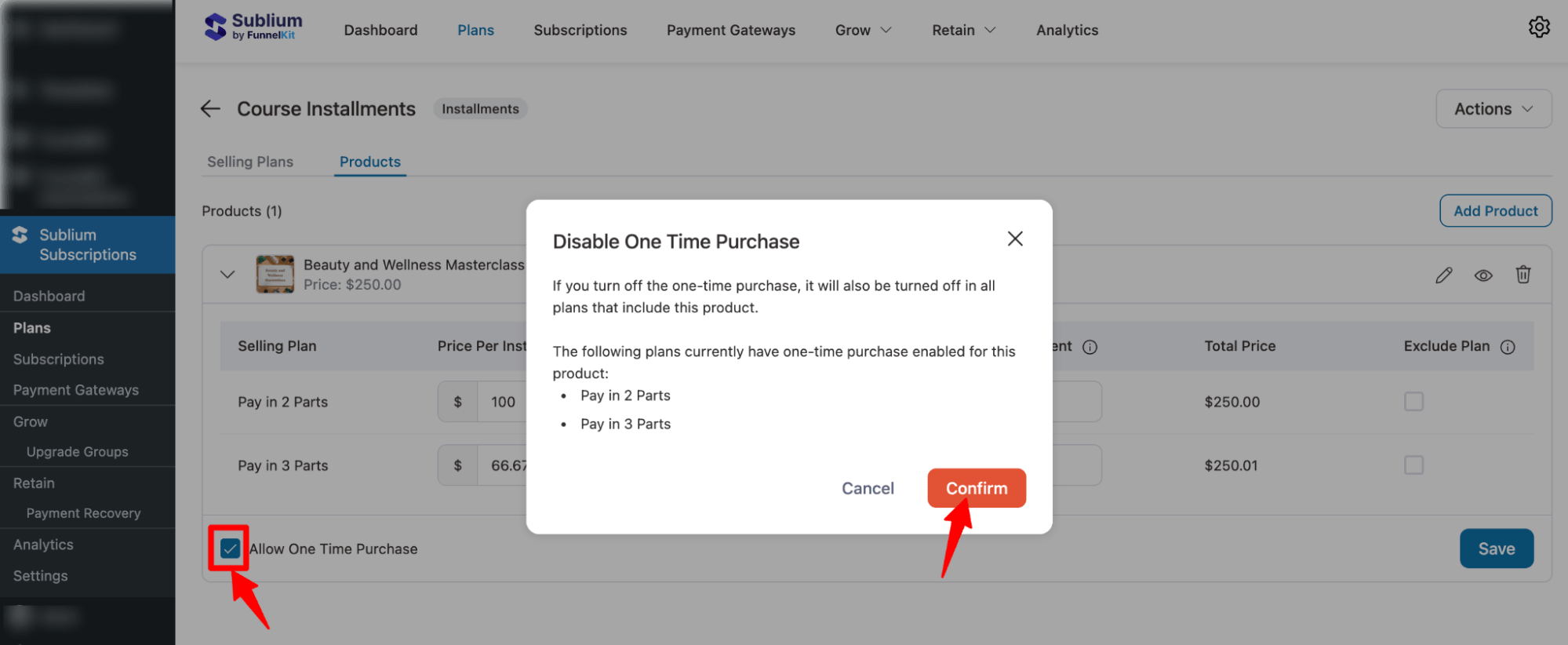
Finally, hit “Save” to update.

That’s it. Now, installment plans are ready.
Storefront Purchase Flow Of Installments
Once you assign products and complete the selling plan setup, all eligible installment plans will automatically appear on the product page for customers.
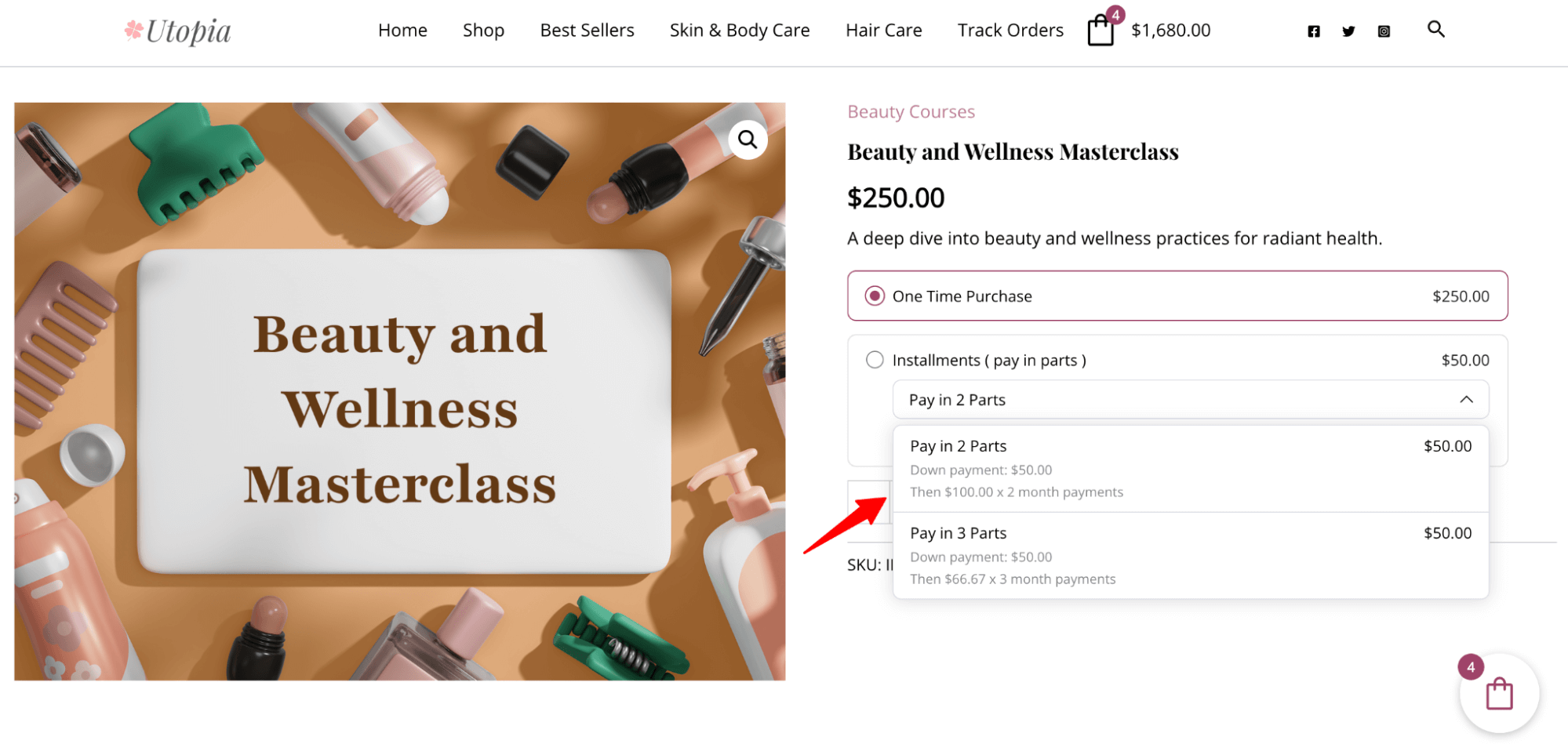
Users can simply select their preferred plan and continue to checkout.
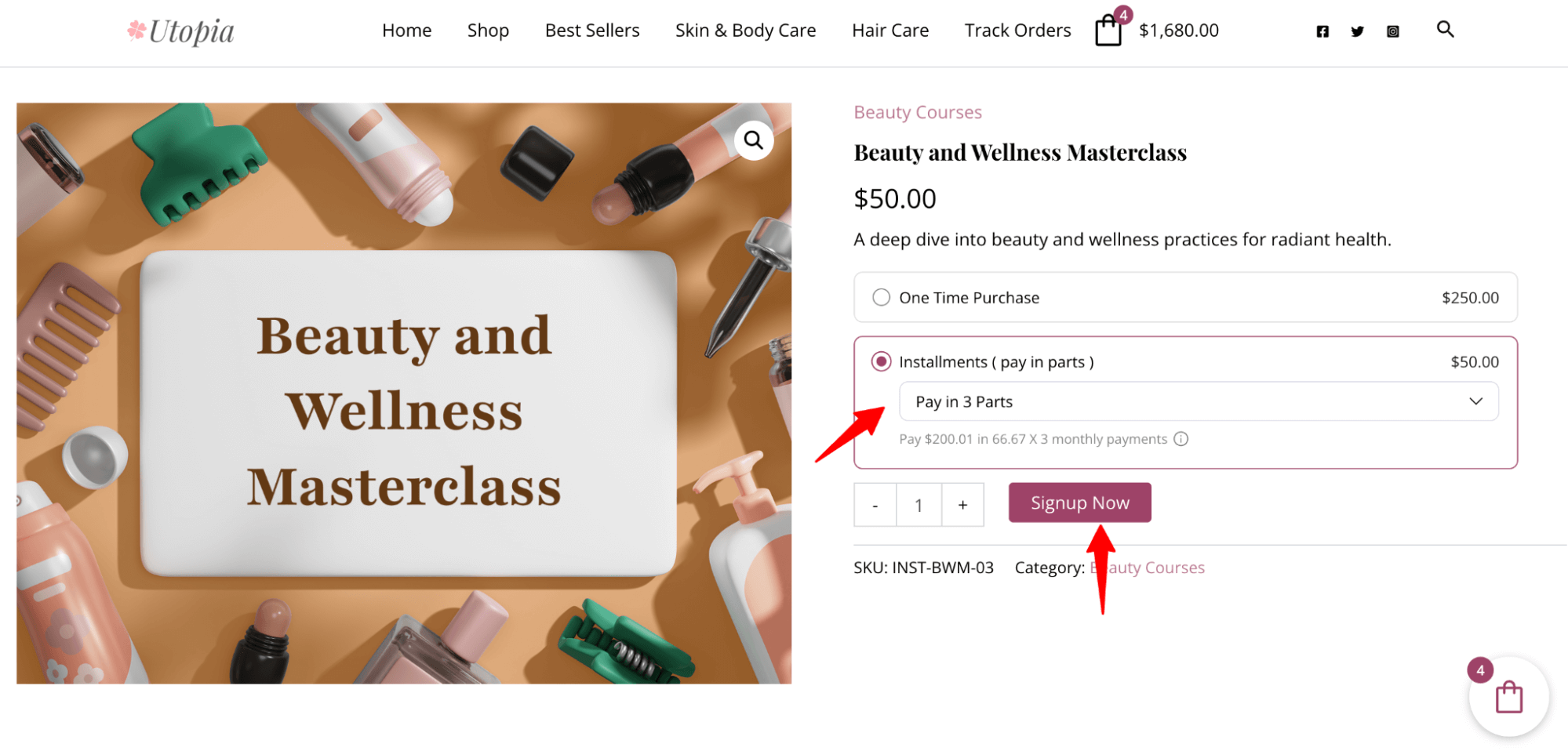
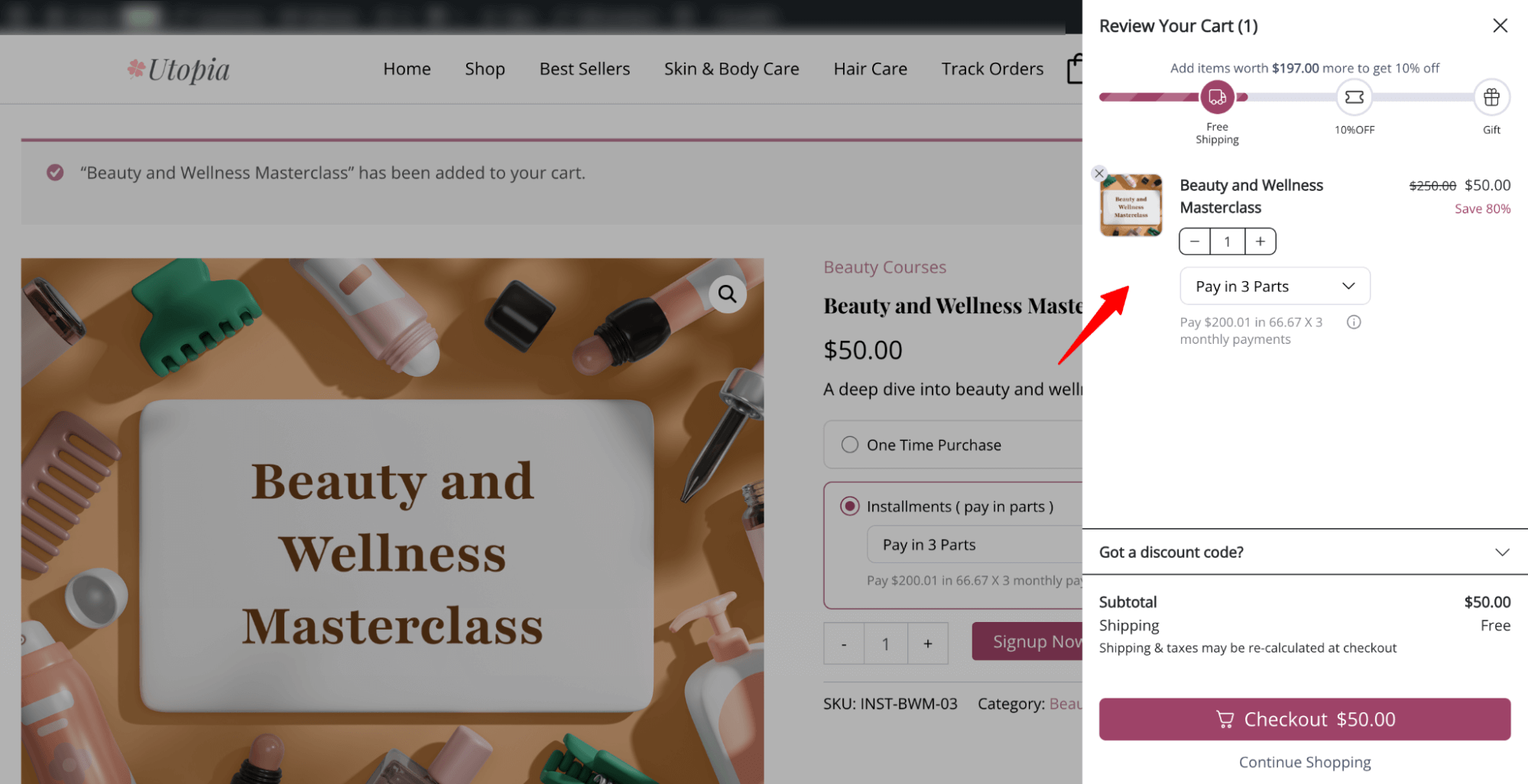
If you’re using a side cart like FunnelKit Cart, here’s how the subscription options will appear in the side cart:
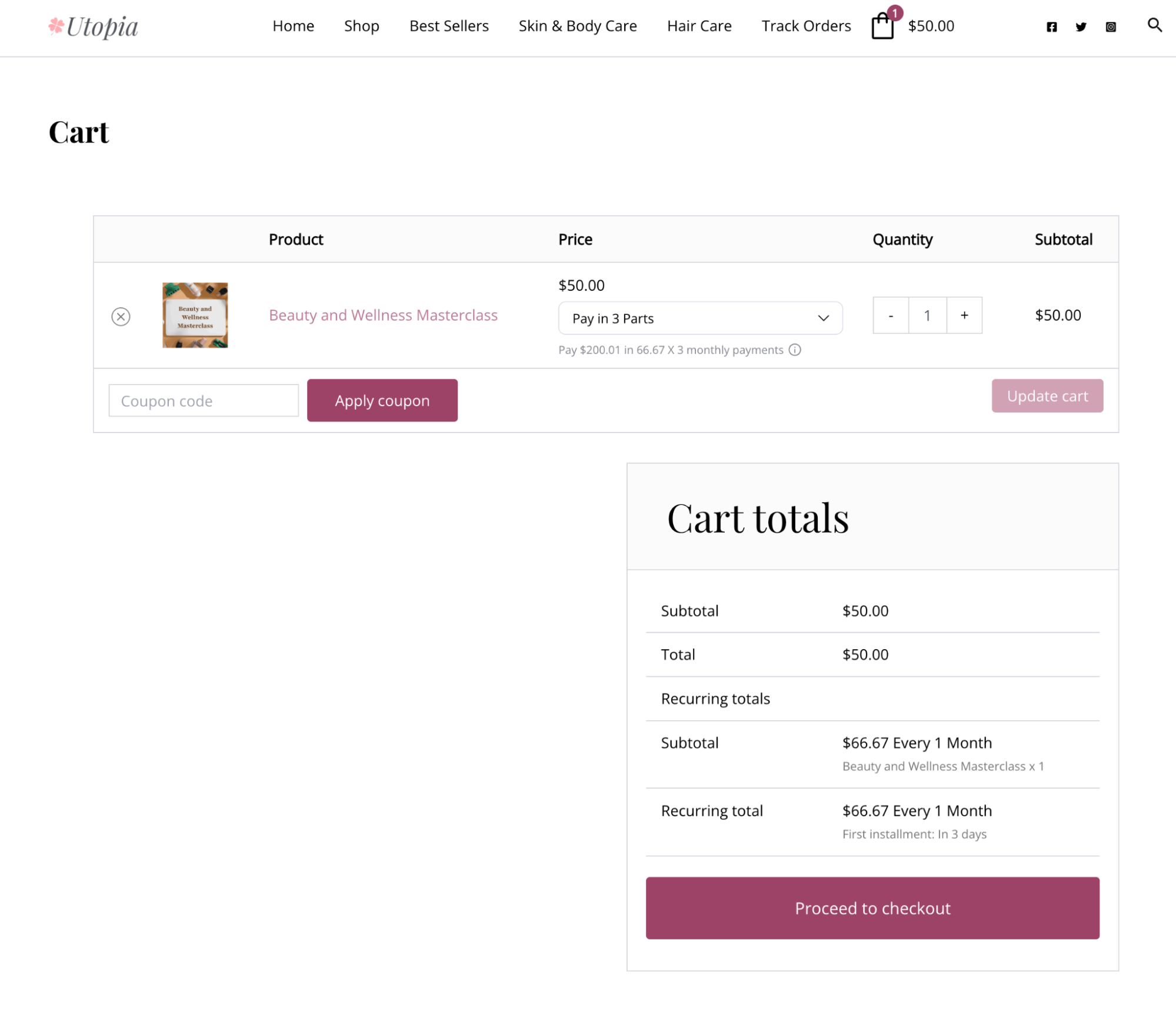
This is how the installment plans look on a default WooCommerce cart page:
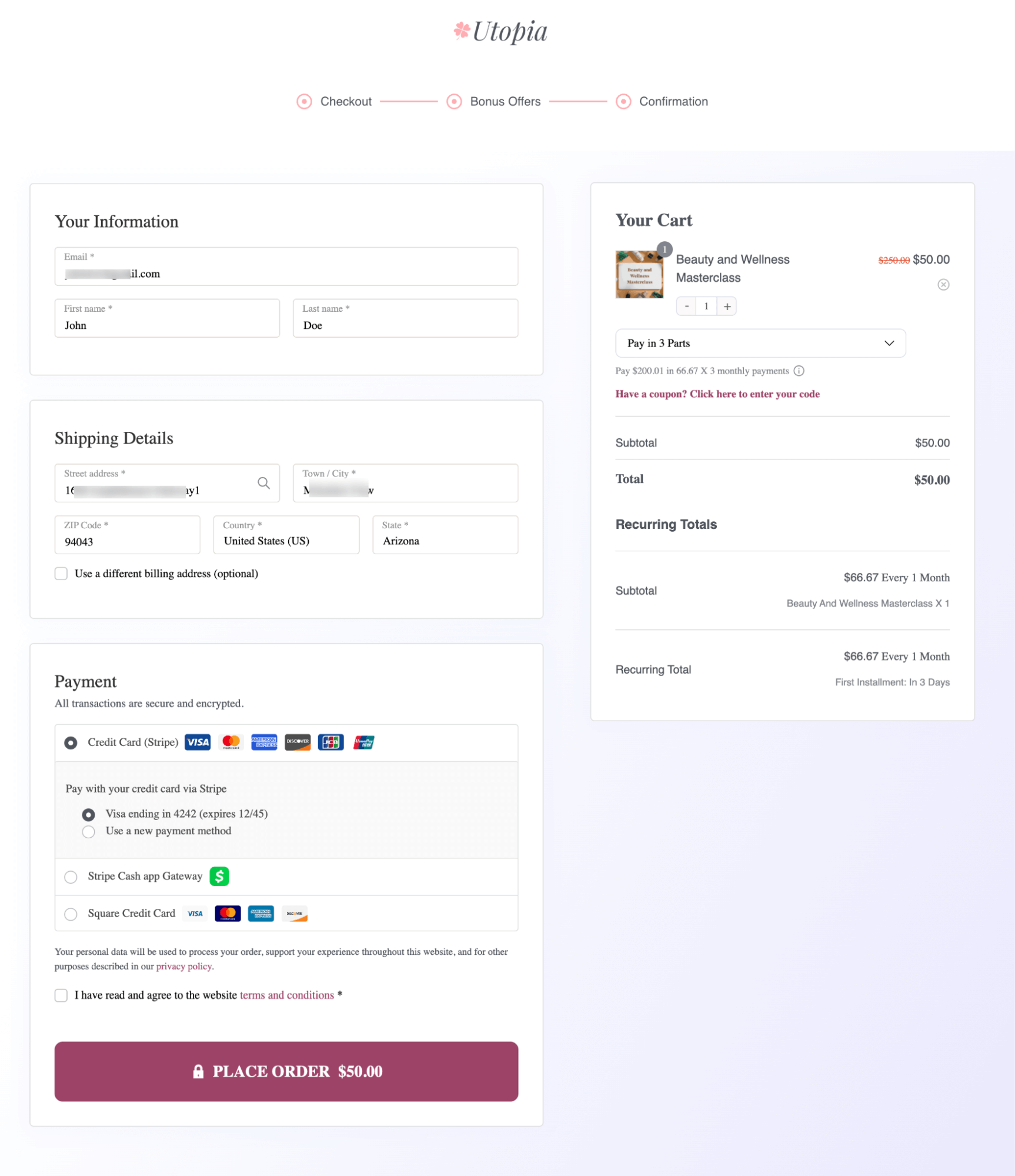
Next, users can check out with any of the available payment methods:
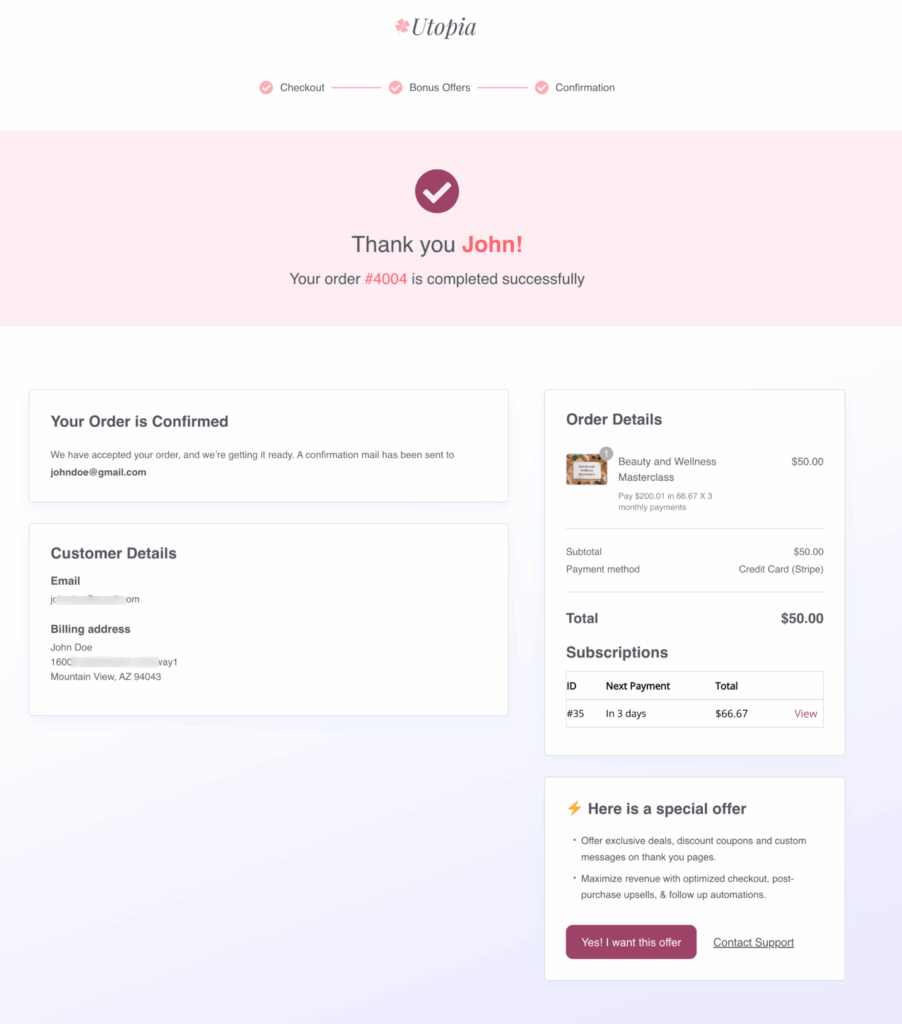
This is what the thank you page looks like after a successful purchase.